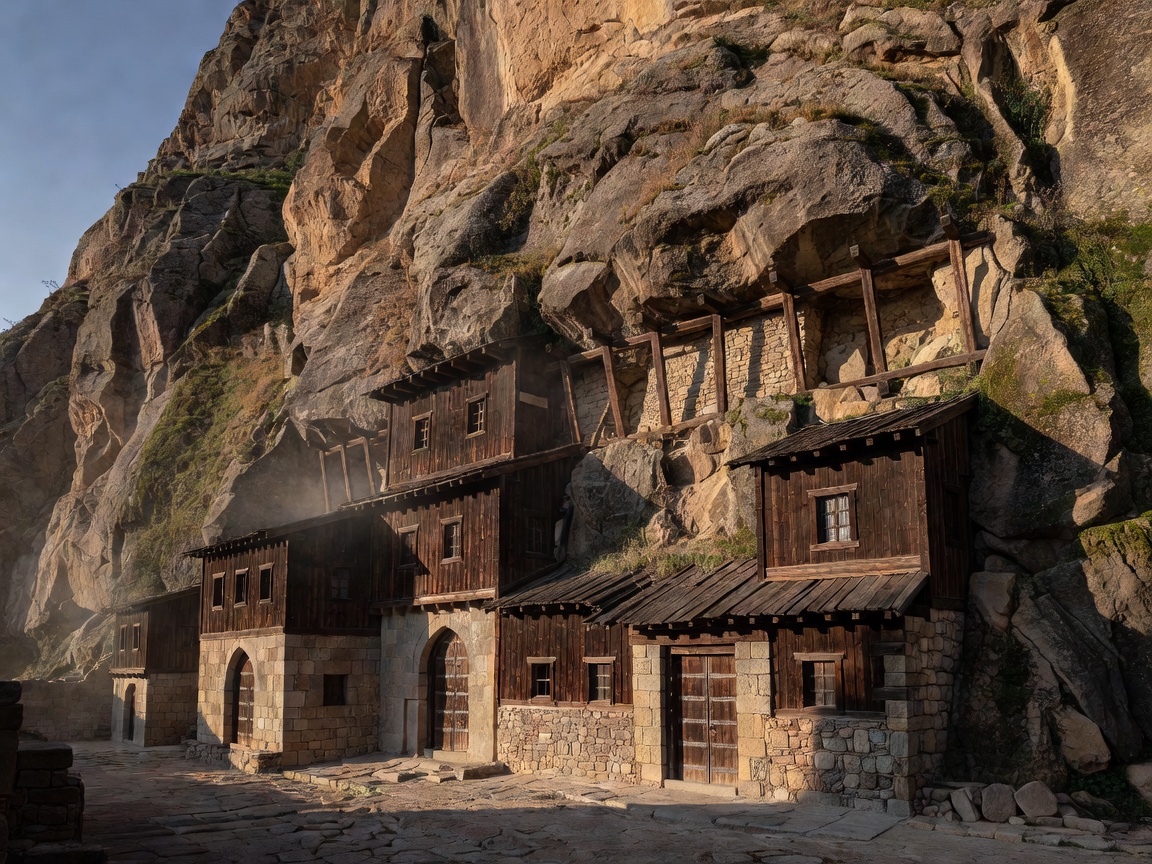
Architecture at the Water’s Source
Built around 1520 under sultanic order, Blagaj Tekke is a masterpiece of Ottoman vernacular architecture situated at the base of a vertical 200-meter karst rock wall in Bosnia and Herzegovina. The monastery stands right beside the subterranean emergence of the Buna River (Vrelo Bune), one of Europe’s largest and coldest karst springs.
The Sufi order chose this precise spot for its intense natural resonance—where massive limestone cliffs, roaring pristine water, and quiet cave mouth converge. The building features classic elements of Ottoman construction, including Turkish bath houses (hamam), guest quarters (musafirhana), and prayer halls aligned toward Mecca.
The Dhikr Tradition
For over 500 years, the Tekke served as a sanctuary for the Naqshbandi, Qadiriyya, and Halveti Sufi orders to perform dhikr (rhythmic chanting and meditation). The acoustics within the timber-beamed rooms amplify the sound of running water from the cave below, creating a unique sensory environment for contemplation.
Hydrological Significance of Vrelo Bune
The Buna spring spews up to 43,000 liters of subterranean water per second out of a dark cave beneath the cliff face. Speleological expeditions conducted by European hydrological teams have traced the cave system back for several kilometers into the limestone plateau without discovering its ultimate origin point.