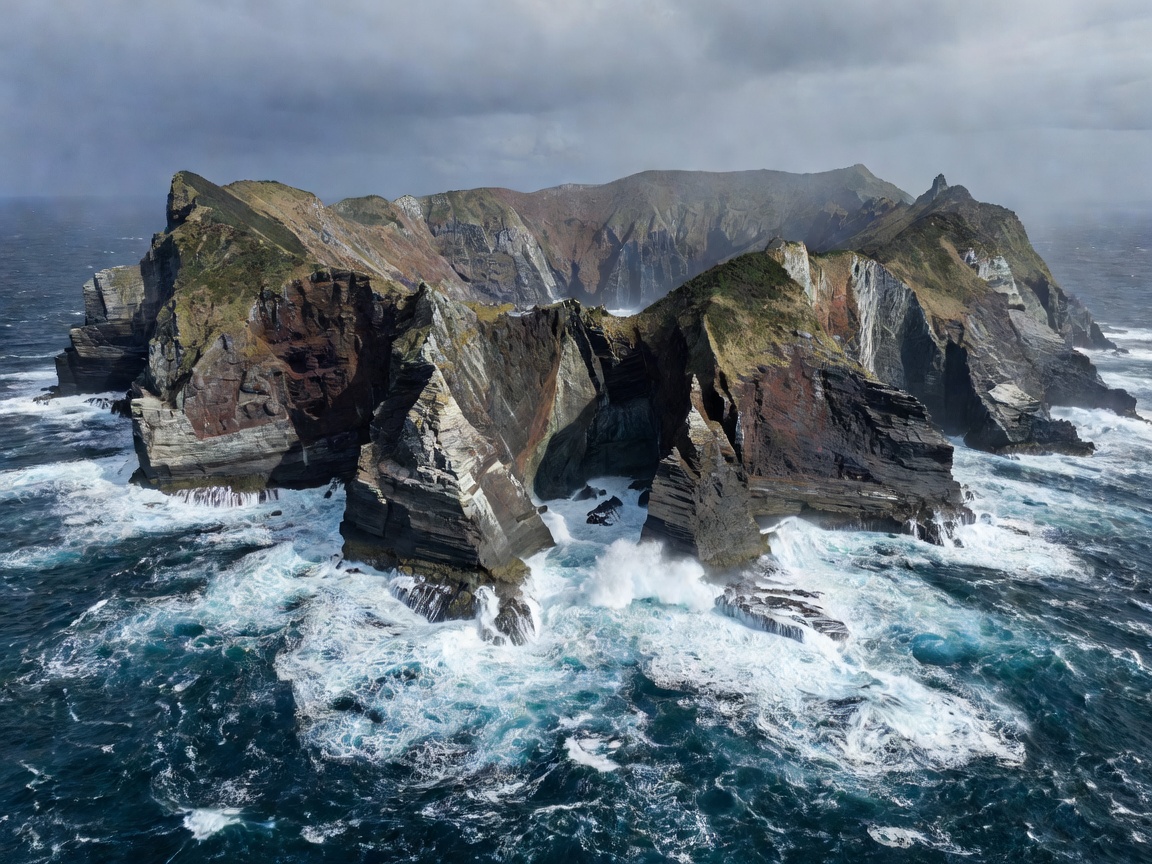
Geological Structure: A Volcano Within a Volcano
Aogashima is a volcanic island located 358 kilometers south of Tokyo in the Philippine Sea. It represents a rare geological phenomenon known as a double caldera: an outer rim crater (Ikenosawa) enclosing a secondary active volcanic cone named Maruyama.
The last major explosive eruption occurred in 1785, claiming the lives of nearly half the island's inhabitants. The surviving population fled for over fifty years before returning to rebuild their lives within the steep walls of the outer caldera. Today, approximately 160 residents call this remote geological vessel home.
Geothermal Infrastructure & Isolation
Because of its continuous geothermal activity, the floor of the caldera emits natural steam vents (hingo). The villagers have harnessed this energy for communal saunas and geo-thermal cookers used to prepare meals and process local sea salt (Hingya salt), rich in volcanic minerals.
Access to Aogashima is notoriously treacherous. The island lacks a natural harbor due to sheer basalt cliffs that drop vertically into intense Pacific swells. Travel is restricted to a single daily helicopter flight from Hachijojima or a small cargo-passenger vessel subject to frequent cancellation due to rough sea conditions.
Cultural Resilience
Life on Aogashima has fostered a distinct subculture defined by self-reliance, local Shinto rituals honoring volcanic spirits, and deep community cooperation. Nighttime views reveal minimal light pollution, rendering the sky above the crater rim an exceptional observatory for astronomy.